

An Essay Concerning Human Understanding – Volume II
John LockeIf a man born blind were suddenly given sight, would he know at a glance which was the cube and which the sphere?
Molyneux's question
The Irish scientist William Molyneux put the riddle to John Locke in a letter, and Locke found it so good that he added it to the second edition of his Essay Concerning Human Understanding. Both men answered no: a person who has only felt shapes has not yet learned to connect them with what the eye sees. The puzzle shows Locke's whole method, which is to take a large claim about the mind and test it against ordinary cases.
Words as a hazard
Few philosophers before him paid such close attention to language. Locke argues that many quarrels are not about things at all, but about words used loosely, or with meanings no two speakers share. He examines names for kinds of creature and sorts of substance, and asks whether the boundaries we draw between species belong to nature or to our habits of speech.
How much can we know?
He then marks out the limits. What we know for certain, he says, is the agreement or disagreement of our ideas; beyond that lies probability, on which most of daily life depends. He sets out where reason must judge faith, and why "enthusiasm", the conviction that an inner light proves itself, deserves suspicion.
First published in 1689, the Essay shaped the Enlightenment from Berkeley and Hume to Voltaire.
Details
- Author
- John Locke (1632–1704)
- Genre
- Philosophical treatise
- First published
- 1689, London
- Original language
- English
- Literary movement
- Empiricism
- Period
- 17th Century
- Shelves
- Philosophy
- Volume
- II
- Language
- English
- Format
- A5 (148 × 210 mm)
- Paper
- Cream, 90 gsm
- Binding
- Perfect bound
- Cover
- Softcover, matte finish
- ISBN
- 979-10-453-1184-8
- EAN
- 9791045311848
- Publisher
- Rémanence Library
Readers' reviews
John Locke
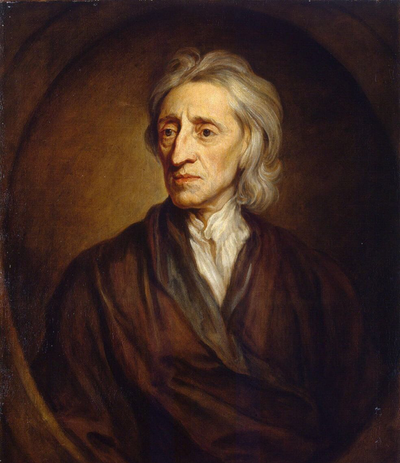
1632–1704
English
John Locke came back to England in February 1689 aboard the fleet that carried Princess Mary to join William of Orange, after six years of exile in the Netherlands. Born at Wrington, Somerset, in 1632, he had studied at Christ Church, Oxford, and trained in medicine, becoming physician and secretary to the first Earl of Shaftesbury. When Shaftesbury fell from favour, Locke fled abroad in 1683.


