

A Little Princess
Frances Hodgson BurnettSara Crewe arrives at Miss Minchin's Select Seminary for Young Ladies in a London fog, with a doll called Emily, a trunk of fine clothes and a habit of imagining herself a princess.
A show pupil
Captain Crewe, an officer in India and a wealthy man, leaves his daughter at the school in London and sails away. Miss Minchin, who loves money, makes a display of her: a sitting room of her own, a maid, a pony and a carriage. Sara is not spoiled by it. She tells stories to the younger girls, shares her cakes and befriends the clumsy Ermengarde and the little scullery maid Becky.
An attic and a game of pretending
Then news comes from India, and overnight the show pupil becomes a drudge, sent to sleep in a cold attic and to run errands in the rain with too little to eat. Sara holds on to her one possession, imagination. She pretends that the attic is a prison and that she is a prisoner in it; she pretends, in the worst moments, that she is still a princess and must behave like one. Nobody, she reasons, can take that from her.
From one story to a book
Frances Hodgson Burnett first told the story as a serial, "Sara Crewe", in 1887 and 1888, and enlarged it into this novel in 1905. Readers of any age will find in it a plain question: what is it that makes someone a lady, or a princess?
Details
- Author
- Frances Hodgson Burnett (1849–1924)
- Genre
- Children's novel
- First published
- 1905
- Original language
- English
- Period
- Early 20th Century
- Shelves
- Literature, Novels
- Language
- English
- Format
- A5 (148 × 210 mm)
- Paper
- Cream, 90 gsm
- Binding
- Perfect bound
- Cover
- Softcover, matte finish
- ISBN
- 978-2-38795-819-8
- EAN
- 9782387958198
- Publisher
- Rémanence Library
Readers' reviews

Frances Hodgson Burnett
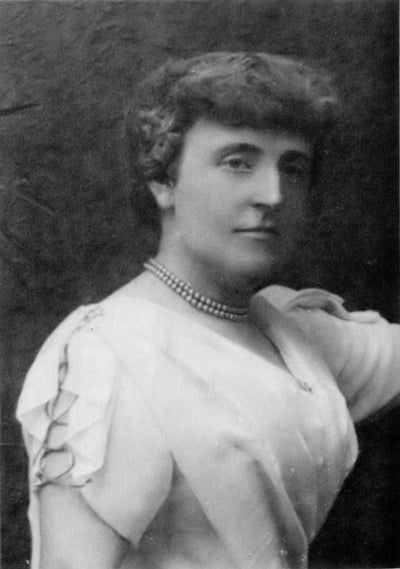
1849–1924
English
Frances Hodgson Burnett was born in Manchester in 1849, and her family's fortunes collapsed after her father's death, which led her mother to emigrate with the children to Tennessee in 1865. She began selling stories to magazines in her teens to help the household, and she kept writing for the rest of her life.


