

A Room of One's Own
Virginia WoolfAsked to speak on women and fiction, Virginia Woolf arrived at a conclusion she called a minor point: a woman must have money and a room of her own if she is to write fiction.
Two lectures, one luncheon
The essay grew out of two talks given at the women's colleges of Cambridge, Newnham and Girton, in October 1928, and Woolf keeps the form of a talk: wandering, personal, and sharply funny. Her narrator, who says she may be called Mary Beton, Mary Seton, Mary Carmichael or any name you please, sits on the grass at an imaginary university and is shooed off it by a beadle. She is not admitted to the library. She is given a luncheon of sole and partridge, and then a dinner at a women's college of prunes and custard, and the contrast is the whole argument in small.
Shakespeare's sister
Back in the British Museum she looks for the history of women's lives and finds almost nothing, and so she invents some. Suppose Shakespeare had a sister as gifted as he, Judith: where could she have gone, and what would have become of her? From Judith the essay passes to Aphra Behn, Jane Austen, the Brontës and George Eliot, and to the question of what a writer needs in order to work.
Published in London in 1929 by the Hogarth Press, it is still the plainest case for why the conditions of writing matter as much as talent.
Details
- Author
- Virginia Woolf (1882–1941)
- Genre
- Essay
- First published
- 1929, London
- Original language
- English
- Literary movement
- Modernism
- Period
- Early 20th Century
- Shelves
- Literature
- Language
- English
- Format
- A5 (148 × 210 mm)
- Paper
- Cream, 90 gsm
- Binding
- Perfect bound
- Cover
- Softcover, matte finish
- ISBN
- 978-2-38795-763-4
- EAN
- 9782387957634
- Publisher
- Rémanence Library
Readers' reviews
Virginia Woolf
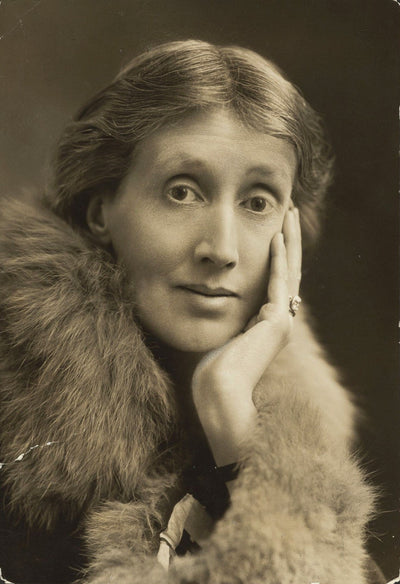
1882–1941
English
Virginia Woolf wrote standing up, at a tall desk, so that she could step back from the page. Born in London in 1882 as Adeline Virginia Stephen, she was educated at home in her father Leslie Stephen's library, and after his death she settled in Bloomsbury, the district that gave its name to her circle of friends.


