

An American Tragedy
Theodore DreiserIn 1906 a young woman named Grace Brown died in the Adirondacks, and her case stayed with Theodore Dreiser for almost twenty years before it became his longest novel.
The preacher's son
Clyde Griffiths grows up in a mission hall, handing out tracts on the street while his parents sing hymns. What he wants is what the shop windows promise: good clothes, a car, a place at the table where the money sits. He works as a bellhop in Kansas City, runs from a scandal there, and at last travels to Lycurgus, in upstate New York, where his rich uncle owns a collar factory and offers him a place in it.
Two women, one ambition
At the factory Clyde breaks his uncle's rule against mixing with the girls under him and falls in with Roberta Alden, a farmer's daughter. Soon after, the Finchleys of Lycurgus notice him, and Sondra, a girl who seems to hold everything he has been told to desire, smiles at him across a drawing room. The novel stays close to Clyde's thoughts as he weighs one life against the other, and as his choices narrow.
A case for the whole country
Dreiser worked on the book through the early 1920s and published it in New York in 1925. The title claims the story for the whole country, not for one man or one town. It is a long, patient book, built from newspaper reports, court records and the details of everyday ambition, and it asks how far a society that sells success is answerable for those it leaves outside.
Details
- Author
- Theodore Dreiser (1871–1945)
- Genre
- Naturalist novel
- First published
- 1925, New York
- Original language
- English
- Literary movement
- Naturalism
- Period
- Early 20th Century
- Shelves
- Literature, Novels
- Language
- English
- Format
- A5 (148 × 210 mm)
- Paper
- Cream, 90 gsm
- Binding
- Perfect bound
- Cover
- Softcover, matte finish
- ISBN
- 978-2-38795-797-9
- EAN
- 9782387957979
- Publisher
- Rémanence Library
Readers' reviews
Theodore Dreiser
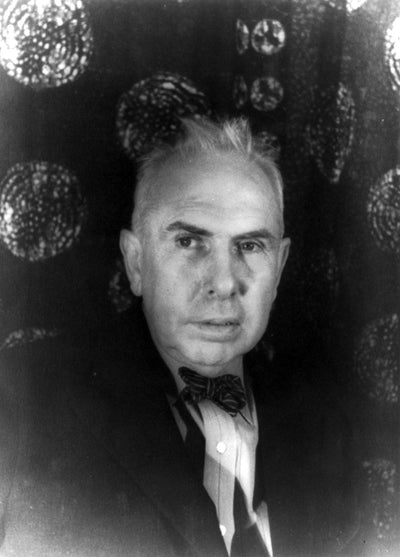
1871–1945
World
Theodore Dreiser's first novel was withdrawn almost as soon as it was published. Born in Terre Haute, Indiana, in 1871 into a poor family of German-American origin, he worked as a newspaper reporter in Chicago and New York before writing Sister Carrie (1900), the story of a country girl who rises in the city without being punished for it. The publisher Doubleday, uneasy about its morality, issued it with little promotion, and it sold poorly.


