

Dubliners
James JoyceFifteen stories, one city, and a boy who stands at a window watching the lamplight on the house where a priest lies dying.
"There was no hope for him this time: it was the third stroke."
A walk through Dublin
Dubliners opens with that sentence, the first of "The Sisters", and moves through childhood, youth, maturity and public life. A boy goes to a bazaar called "Araby" with a florin in his pocket. A young woman named Eveline weighs a ticket out of Dublin against a promise to her dying mother. A bank clerk in "A Painful Case" refuses a friendship until it is too late. Canvassers gather around a fire in "Ivy Day in the Committee Room" to drink and talk of a dead leader.
Why the book was held back
Joyce wrote the stories between 1904 and 1907 and meant them, he said, as a "chapter of the moral history" of his country. Printers took fright at real shop names and a few phrases, and the book was delayed for years until it appeared in London in 1914. Its style is plain and exact, with every detail chosen, and the final story, "The Dead", is regularly named among the finest short stories in English.
An evening of music and snow
"The Dead" takes place at an annual Christmas party given by two elderly sisters, with songs, a goose, an after-dinner speech and a quiet conversation on the stairs. Few endings in the language have sent so many readers back to the beginning.
Details
- Author
- James Joyce (1882–1941)
- Genre
- Short story collection
- First published
- 1914, London
- Original language
- English
- Period
- Early 20th Century
- Shelves
- Literature, Short Stories
- Language
- English
- Format
- A5 (148 × 210 mm)
- Paper
- Cream, 90 gsm
- Binding
- Perfect bound
- Cover
- Softcover, matte finish
- ISBN
- 978-2-38795-676-7
- EAN
- 9782387956767
- Publisher
- Rémanence Library
Readers' reviews
James Joyce
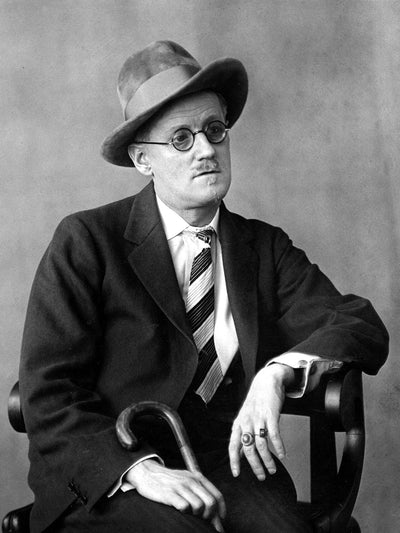
1882–1941
Irish
The whole of Ulysses takes place on a single day, 16 June 1904, in Dublin, and James Joyce wrote it almost entirely abroad. Born in Dublin in 1882, he left Ireland in 1904 with Nora Barnacle, and lived afterwards in Trieste, Zurich and Paris, working as a language teacher.


