

Flatland: A Romance of Many Dimensions
Edwin Abbott AbbottA square who lives on a plane with no height is visited on the last night of the year 1999 by a stranger from a dimension he has never imagined.
"I call our world Flatland, not because we call it so, but to make its nature clearer to you, my happy readers, who are privileged to live in Space."
A country of lines and polygons
The narrator, A. Square, describes a society ruled by shape. Women are straight lines, soldiers and workmen are isosceles triangles, gentlemen are equilateral triangles or have more sides, and the priests are so many-sided that they are called circles. The more sides, the higher the rank. A Flatlander recognises another by feeling an angle or judging it in the fog, and the dangers of a sharp point are not small.
Upward, not Northward
The Square's world is shaken by a Sphere who passes through the plane and appears to him as a circle that grows and shrinks. When the Sphere tells him to look "Upward, not Northward", the Square cannot even understand the direction. Abbott, a headmaster and clergyman, wrote the book as a satire on Victorian class and the place of women, and as a gentle lesson in how hard it is to imagine more than we see.
From one dimension to the next
Published in London in 1884 under the pseudonym A Square, Flatland has since been read by mathematicians, physicists and anyone who has wondered whether our own world might have a dimension we cannot see. It is short, witty and, once the idea has taken hold, very difficult to forget.
Details
- Author
- Edwin Abbott Abbott (1838–1926)
- Genre
- Satirical novella
- First published
- 1884, London
- Original language
- English
- Period
- 19th Century
- Shelves
- Literature, Novels
- Language
- English
- Format
- A5 (148 × 210 mm)
- Paper
- Cream, 90 gsm
- Binding
- Perfect bound
- Cover
- Softcover, matte finish
- ISBN
- 978-2-38795-691-0
- EAN
- 9782387956910
- Publisher
- Rémanence Library
Readers' reviews
Edwin Abbott Abbott
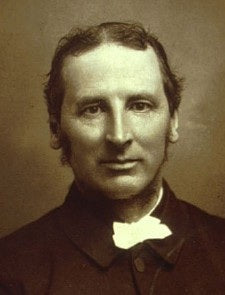
1838–1926
English
Edwin Abbott Abbott spent most of his working life as a schoolmaster, and he wrote a book about a world with only two dimensions. Born in London in 1838, he studied at Cambridge and became headmaster of the City of London School in 1865, a post he held until 1889.


