

The Hound of the Baskervilles
Arthur Conan DoyleA dead baronet, a family curse and the track of a paw too large for any dog: Sherlock Holmes is called to Dartmoor, and then, for long stretches, leaves Watson to face it alone.
"Mr. Holmes, they were the footprints of a gigantic hound!"
A legend at Baker Street
Dr Mortimer lays an old manuscript on the table and reads aloud the story of Sir Hugo Baskerville, who died on the moor in the seventeenth century, and of the spectral hound said to have haunted his line ever since. Then he explains why he has come. Sir Charles Baskerville has been found dead in the yew alley of Baskerville Hall, and the doctor saw what lay in the gravel beside the body.
Watson on the moor
Sir Henry, the heir, arrives from Canada, and Holmes sends Watson south with him. The novel is told largely through Watson's letters and diary: the empty granite country of Dartmoor, the Grimpen Mire that swallows ponies, a convict at large, a naturalist who chases butterflies and a household in which nobody quite explains themselves. At night, across the moor, something howls.
From The Strand to the bookshelf
Arthur Conan Doyle serialised the story in The Strand Magazine from August 1901, with Sidney Paget's illustrations, and it was published as a book in 1902. It brought Holmes back to print after Doyle had sent him over the Reichenbach Falls, by setting the case before that fall. It remains the best place to meet the detective, and the best excuse for reading with the lights low.
Details
- Author
- Arthur Conan Doyle (1859–1930)
- Genre
- Detective novel
- First published
- 1902, London
- Original language
- English
- Period
- Early 20th Century
- Shelves
- Literature, Novels
- Language
- English
- Format
- A5 (148 × 210 mm)
- Paper
- Cream, 90 gsm
- Binding
- Perfect bound
- Cover
- Softcover, matte finish
- ISBN
- 978-2-38795-664-4
- EAN
- 9782387956644
- Publisher
- Rémanence Library
Readers' reviews
Arthur Conan Doyle
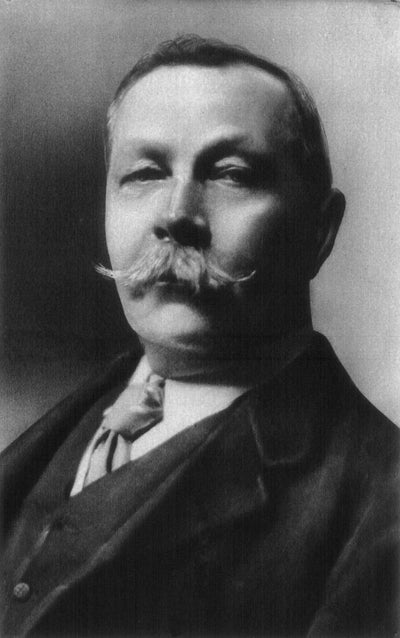
1859–1930
Scottish
Arthur Conan Doyle based Sherlock Holmes on a surgeon and teacher he admired, Joseph Bell of Edinburgh, and then tried more than once to be rid of the detective. Born in Edinburgh in 1859, he studied medicine there and practised as a doctor at Southsea, writing in the gaps between patients.


