

Kim
Rudyard KiplingAn orphan boy sits astride a cannon in the middle of Lahore, and by the end of the first chapter he has befriended a Tibetan lama and carried a secret message for a horse dealer.
"He sat, in defiance of municipal orders, astride the gun Zam-Zammah"
Two quests on the Grand Trunk Road
Kimball O'Hara is the son of an Irish soldier, dressed as a street boy and known across the bazaars as "Little Friend of all the World". The old lama, who has come down from the hills in search of a holy River of the Arrow, wins his heart, and Kim becomes his disciple and goes with him along the road. But Mahbub Ali, the Pathan horse dealer, has other uses for a boy who can pass unnoticed anywhere.
The Great Game
The British secret service watches Russian agents on the northern frontier, and Colonel Creighton sees in Kim a recruit. He is sent to school at Lucknow, trained to survey and to observe, and taught to disguise himself, while the lama's quest and the spy's work run side by side through bazaars, railway carriages and Himalayan passes.
India in the crowd
Rudyard Kipling was born in Bombay and drew on his boyhood and his years in Lahore. He serialised the novel in 1900 and 1901, and it was published in London in 1901. Its subject is the crowd on the road: pilgrims, soldiers, wives, merchants and holy men, all heard in their own voices.
Details
- Author
- Rudyard Kipling (1865–1936)
- Genre
- Adventure novel
- First published
- 1901, London
- Original language
- English
- Period
- Early 20th Century
- Shelves
- Literature, Novels
- Language
- English
- Format
- A5 (148 × 210 mm)
- Paper
- Cream, 90 gsm
- Binding
- Perfect bound
- Cover
- Softcover, matte finish
- ISBN
- 978-2-38795-693-4
- EAN
- 9782387956934
- Publisher
- Rémanence Library
Readers' reviews
Rudyard Kipling
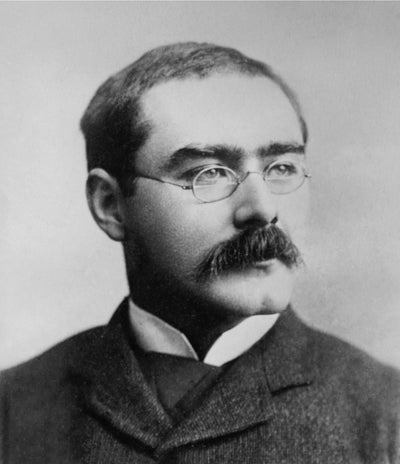
1865–1936
English
At the age of five Rudyard Kipling was taken from Bombay, where he had been born in 1865, and left with a foster family in Southsea, an experience he later described as years of misery. He returned to India at sixteen to work on the Civil and Military Gazette in Lahore, and his stories of Anglo-Indian life soon made his name.


