

The Last Man
Mary ShelleyMary Shelley's introduction finds her in a cave near Naples, picking through scattered leaves of prophecy, and what she reads there is the story of how the human race came to an end.
England in the 2070s
The narrator is Lionel Verney, born poor and half wild in Cumberland, the son of a favourite of the old king who ruined himself and died. Verney grows up resentful of the nobility. Then he meets Adrian, the king's son, an idealist who has given up his rank for a republic, and the ambitious Lord Raymond. England has become a republic, and Verney has found something to lose.
A circle of lost friends
Mary Shelley wrote the book after her husband, Percy Bysshe Shelley, drowned in 1822 and Lord Byron died in 1824. Adrian is generally read as a portrait of Shelley and Raymond as a portrait of Byron, and the friendships in the novel have the weight of those losses. The first reviewers disliked it, and for a long time it was hard to find.
A plague that does not respect borders
In the later chapters a sickness arrives from the East and spreads through countries, armies and cities, and the novel follows its slow advance. Published in London in 1826, it is a pioneering English novel of the end of mankind, written by the author of Frankenstein as an elegy.
Details
- Author
- Mary Shelley (1797–1851)
- Genre
- Apocalyptic novel
- First published
- 1826, London
- Original language
- English
- Literary movement
- Romanticism
- Period
- 19th Century
- Shelves
- Literature, Novels
- Language
- English
- Format
- A5 (148 × 210 mm)
- Paper
- Cream, 90 gsm
- Binding
- Perfect bound
- Cover
- Softcover, matte finish
- ISBN
- 978-2-38795-689-7
- EAN
- 9782387956897
- Publisher
- Rémanence Library
Readers' reviews

Mary Shelley
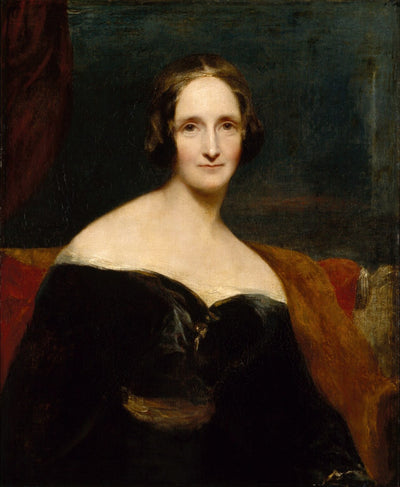
1797–1851
English
Frankenstein began as a challenge at a lakeside villa. In the wet summer of 1816, Mary Godwin, aged eighteen, was staying near Geneva with Percy Bysshe Shelley, Lord Byron and Byron's physician, and the company agreed to each write a ghost story. Hers became a novel.


