

The Red Badge of Courage
Stephen CraneHenry Fleming enlists with dreams of glory in his head and learns, in the days before his first battle, that he does not know how he will behave.
"He had been to touch the great death, and found that, after all, it was but the great death."
The youth in the ranks
Crane names few of his men and none of the war's battles. Henry is "the youth"; his comrades are "the loud soldier" and "the tall soldier", and the regiment is a blue mass moving through fields and woods he cannot see beyond. He listens to rumour, counts the dead along the road, and waits. When the fighting comes, it comes in smoke and noise, and the book stays inside his head the whole time.
Fear, and what follows it
Much of the novel is about what a man tells himself afterwards. Henry runs; he meets a column of wounded, and one of them asks where he is hurt. A wound that others take for honour, and a shame he alone knows of, set him at odds with his own regiment before he is ready to face it again.
A war written by a man who was not there
Stephen Crane was born in 1871, six years after Appomattox. He wrote the book at twenty-three, working from veterans' accounts and from his imagination; a shortened version ran in newspapers in 1894, and Appleton issued the full text in New York in 1895. Colour is everywhere in it: red suns, yellow fire, grey fog. Readers go back to it for the pages in which one young man tries to see himself clearly.
Details
- Author
- Stephen Crane (1871–1900)
- Genre
- War novel
- First published
- 1895, New York
- Original language
- English
- Literary movement
- Realism
- Period
- 19th Century
- Shelves
- Literature, Novels
- Language
- English
- Format
- A5 (148 × 210 mm)
- Paper
- Cream, 90 gsm
- Binding
- Perfect bound
- Cover
- Softcover, matte finish
- ISBN
- 978-2-38795-904-1
- EAN
- 9782387959041
- Publisher
- Rémanence Library
Readers' reviews
Stephen Crane
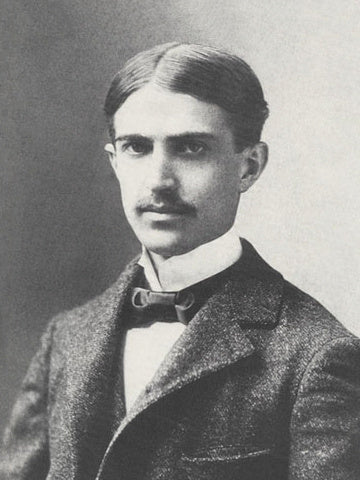
1871–1900
World
Stephen Crane described the horror of the American Civil War in detail, yet he was born in 1871, six years after it ended, and had never seen a battle. The youngest of fourteen children of a Methodist minister in Newark, New Jersey, he worked as a journalist in New York, and published Maggie: A Girl of the Streets (1893) at his own expense.


